Workshop Session D (Day 2 - 16:00)

Use of bodily self of the therapist – embodied reflexivity
Dawn Thibert
Systemic Psychotherapist
South London and Maudsley NHS Trust
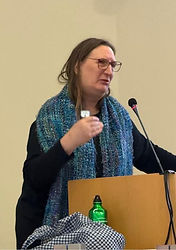
Workshop Description
I will give an overview of my doctoral research about therapists’ bodily sensations evoked in family therapy sessions. This involved studying the post session discussions, interviews and focus groups with reflecting team members, as well as reflecting on my practice as the lead family therapist and systemic supervisor. My research is based in an adult forensic mental health setting where I found that my bodily sensations evoked were stronger than I had experienced before. I will present key findings and implications for practice inviting further discussion about how reflecting teams post session discussions can be a safe enough space to talk about bodily sensations evoked and what sense is made of them.
I use poetry to express what I am noticing in my body, and I will share some poems from my research to invite workshop participants to write their own poem about bodily sensations they have noticed in their work, or indeed no sensations. Workshop participants will be invited to share their poems if they feel comfortable to do so with privacy respected if they prefer not to. I will encourage a discussion about workshop participants experiences of bodily sensations evoked in their work and what was done with these. I expect the discussion to cover differing relationships to our bodies, gender and cultural variations, power dynamics and privileges of who is safe enough to bring their bodily self into the work.
I focus on bodily sensations to illuminate the sense and meanings made of them, the interpretations, which often go quickly to identifying and naming feelings, which could have multiple ways of understanding them. This is a way to slow down this process to be more aware of the constructions being made. Systemic theories and concepts include use of self of the therapist, reflexivity, embodiment, dialogical practice, reflecting teams.
I will conclude the workshop with sharing a suggestions sheet to invite talking about what therapists notice in their bodies during therapy in the post session discussion. I will invite participants to comment on this sheet and make additions, which is designed to overcome barriers to discussing bodily sensations experienced during family therapy, in the post session discussion.
I aim for workshop participants to take away greater confidence in knowing that experienced therapists routinely make use of the bodily sensations evoked in the work, but do not talk about it. I want to get across the message that strong bodily responses provide important information about clients, therapists and the therapy. Our own resonances can help illuminate our own blind spots, which are part of the interactions. I expect that like me, knowing the extent of bodily communication that takes place between clients and therapists in practice, will make workshop participants able to go further with this level of communication, that does not need words. Workshop participants will also come away with tips and ideas about how to cultivate bodily sensitivity that work for them.